Orientation matters, but less than people think
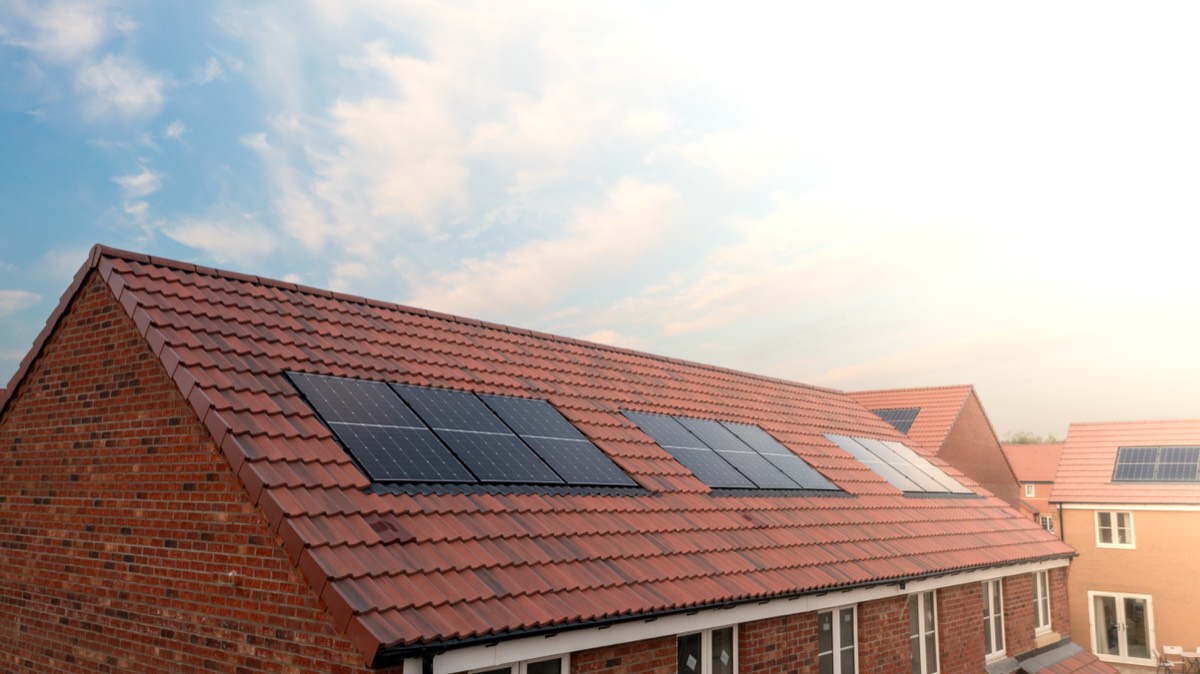
South is best. East-west splits produce a flatter curve across the day, which can suit a household that uses power in the morning and evening. North-facing main roofs are usually a no from us.
Up to £15,000 · 0% and low-interest lenders
Solar PV is one of the scheme's headline measures, with its own £15,000 cap. And it is not limited to starting from scratch — the rules explicitly include adding panels to a system you already have.
If your roof needs work first, a lender can offer you separate, ordinary finance for it — at normal rates, without the Warm Homes discount. We will tell you at survey if this applies to you, before you apply for anything.
Solar PV and battery storage are separate measures with separate £15,000 caps. A combined solar-and-battery installation can draw on both. All ancillary work still has to fit inside the relevant cap.
For solar PV to be fundable under the scheme, an MCS-certified product must be installed by an MCS-certified installer who is certified for that specific measure, to the relevant MCS design and installation standard. You cannot do the work yourself, and a non-MCS tradesperson's quote will be rejected by the lender — "quote provided by non-MCS registered tradesperson" is one of the scheme's listed rejection reasons.
After we install, we lodge the completed work in the MCS Installation Database. That generates the MCS certificate your lender uses to verify the job and claim its government grant. Without it, the lender cannot claim, so this step is not administrative box-ticking — it is the hinge the whole thing turns on.
Roof orientation, pitch, shading, your current electricity use and when you use it. If solar is a poor fit for your property, this is where we say so.
Panel layout, inverter sizing, cable routes, consumer unit and earthing checks, scaffold requirements, and whether a battery earns its keep for your usage pattern.
Itemised, on headed paper, addressed to you, with our MCS number, the full installation address and the system size in kW. Valid for your application for six months.
Typically one to two days on site for a domestic array, plus commissioning, handover and the MCS lodgement that your lender needs.
A free survey gives you real numbers for your property — not a national average.
South is best. East-west splits produce a flatter curve across the day, which can suit a household that uses power in the morning and evening. North-facing main roofs are usually a no from us.
A single chimney, dormer or tree can disproportionately hurt a string. Optimisers or microinverters can mitigate it; sometimes the right answer is simply fewer panels in a better place.
Electricity you use yourself is worth far more than electricity you export. That is the whole argument for a battery, and it is why we ask about your daily routine before quoting.
See illustrative costs and savings Should you add a battery?
Free, no-obligation
Tell us about your roof and your electricity use. We will design a system and quote it in the format a Warm Homes Loan lender requires.
Prefer to talk it through? Email hello@warmhomeloans.org.